
Door won't lock behind the locking bar
What a properly locked OcuTrap door looks like, how to check it, and what to do when the door rests on top of the locking bar.
Applies to OcuTrap R1 and R2
When the door closes correctly, it sits behind and underneath the locking bar, with the actuator extended to its full length. If the door comes to rest in front of the locking bar, the bar cannot hold the door down. A captured animal can push from the inside and bend the door upward, creating enough gap to escape.
What "fully closed and locked" looks like:
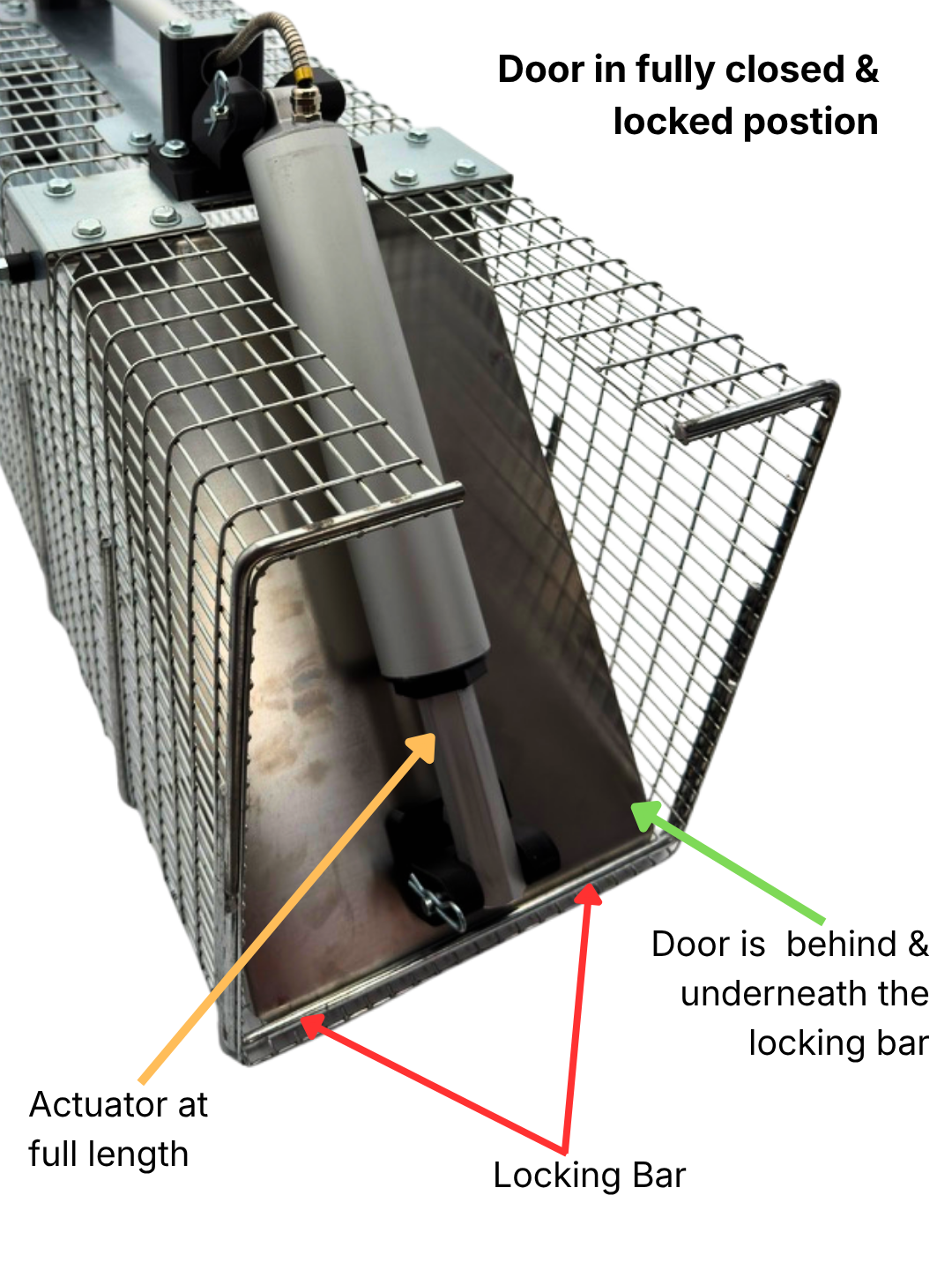
- Actuator is at its full length (fully extended).
- Door is behind and underneath the locking bar along its entire width, not resting on top of or in front of the bar.
- The locking bar runs across the door opening and physically blocks the door from lifting.
How to verify (every trapping session):
- From the app, tap Close and wait for the door to fully close.
- Look at the door from the front of the trap.
- Confirm the door edge is tucked under the locking bar across the full width, not pinched on top of it or sitting outside it.
- Gently try to lift the door by hand. It should not move; the locking bar should stop it within a small fraction of an inch.
If the door is on top of or in front of the locking bar:
- Tap Open, wait for the door to fully retract, then tap Close again.
- Check that Enhanced Door Closing is on (Settings → Door). It is on by default. It re-seats the door under the locking rod after every close. It does not confirm the lock, so keep checking the door at the trap when a capture matters.
- Inspect the door track and locking bar area for debris (dirt, vegetation, ice).
- Check that the door is not bent. A previously bent door may not seat correctly even when the mechanism works. Contact support if the door edge is deformed.
Why it matters: A door that is not behind the locking bar may not prevent an animal from escaping.
See also: Enhanced door closing
R1 only: If the motor mounting position needs adjustment to reduce the gap, see Adjusting the motor bracket. That procedure applies only to the R1.